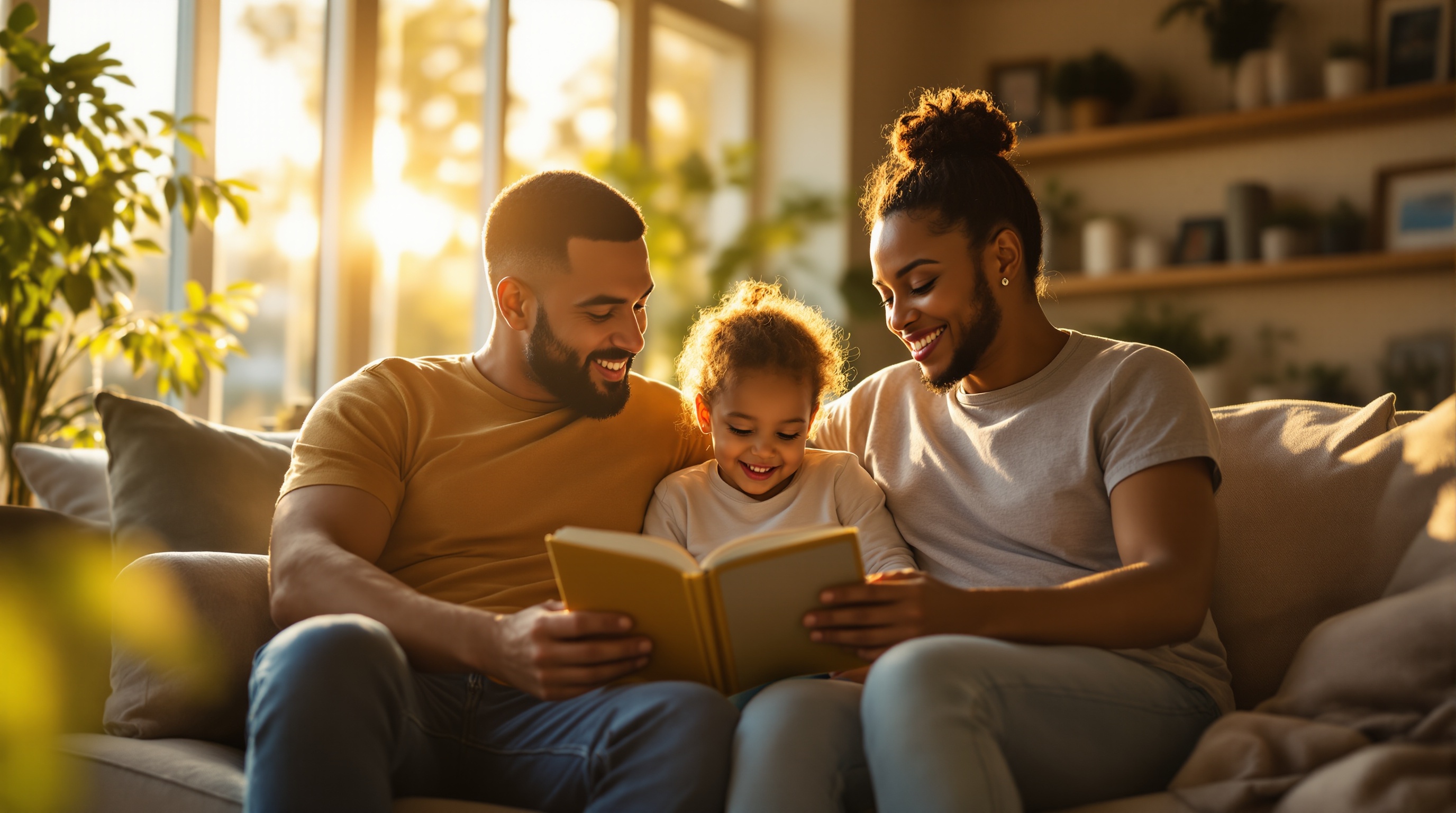
Solidifying the Bond: The Process of Step-Parent Adoption in Ontario
How to legally adopt your spouse's child and become a permanent parent, with or without the biological parent's consent.
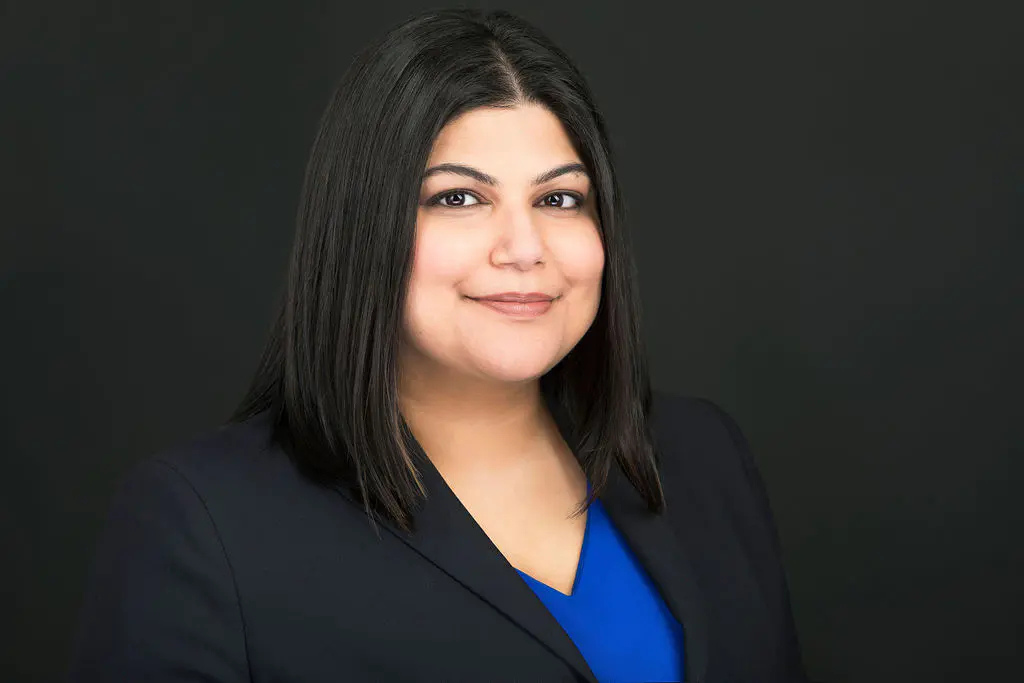
This guide was reviewed by Deepa Tailor, Senior Family Lawyer, to ensure compliance with the Child, Youth and Family Services Act and relative adoption precedents (2026).
Too Busy to Read? The 30-Second Answer:
- Eligibility: You can apply if you are married to the bio-parent or in a conjugal relationship, and reside in Ontario.
- The Hurdle: The other biological parent MUST consent (or have rights terminated by the court). This is often the hardest part.
- The Result: Adoption is permanent. It grants full inheritance rights and severs the legal tie to the other bio-parent.
More Than a Title
You pack the lunches. You drive to soccer. You read the bedtime stories. In every way that matters, you are "Mom" or "Dad." But without a court order, you have no legal rights.
Step-parent adoption is the gold standard for blended families. It transforms your emotional bond into a legal relationship—giving you decision-making authority, inheritance rights, and the peace of mind that comes with permanence.
But here's the reality: adoption requires the other biological parent to step aside. Either they consent voluntarily, or the court terminates their rights. This is where most families get stuck—and where strategic legal guidance becomes essential.
This guide walks you through the eligibility requirements, the consent hurdle, the court process, and the profound legal shift that happens when the adoption order is granted.
The Eligibility Checklist
Under the Child, Youth and Family Services Act (CYFSA), step-parent adoption has specific eligibility criteria. You must meet ALL of the following:
Ontario Residency
You must be a resident of Ontario. The child must also reside in Ontario.
Marital or Conjugal Relationship
You must be married to the child's biological parent OR in a conjugal relationship (common-law) with them. Courts look for stability and commitment.
Best Interests of the Child
The court's paramount consideration is always the child's best interests. This includes emotional bonds, stability, and the child's own wishes (if age-appropriate).
Adult Status
You must be at least 18 years old to apply for adoption in Ontario.
Important Note:
Meeting these criteria doesn't guarantee approval. The court will conduct a thorough assessment, and in some cases, a home study may be required to evaluate the family environment.
The "Bio-Parent" Problem (Radical Honesty)
This is where most people get stuck.
You cannot simply "adopt" a child because the other parent is annoying, absent, or uninvolved. They must sign away their rights, or you must prove to a judge why their consent should be dispensed with.
Option 1: Voluntary Consent
The cleanest path is when the other biological parent voluntarily consents to the adoption. They must sign a formal Consent to Adoption form, which is witnessed and filed with the court.
Why would a parent consent? Common scenarios include:
- They have had no contact with the child for years and acknowledge the step-parent's role
- They want to be relieved of child support obligations
- They recognize that adoption is in the child's best interests
Option 2: Dispensing with Consent
If the biological parent refuses to consent (or cannot be located), you can ask the court to dispense with their consent. This is a high bar. You must prove one of the following:
Abandonment
The parent has had no contact or provided no support for at least 12 months, with no reasonable excuse.
Persistent Neglect or Refusal
The parent has persistently failed to fulfill their parental obligations.
Inability to Consent
The parent is mentally incapable of providing consent.
Unreasonable Withholding
The parent is withholding consent unreasonably, contrary to the child's best interests.
The Reality: Dispensing with consent requires compelling evidence and often involves contested court hearings. This is not a DIY process.
The Process: Step-by-Step
File the Application
You'll file an Application for Adoption with the Ontario Court of Justice. Required documents include:
- • Application form (Form 8)
- • Affidavit of Parentage
- • Consent to Adoption (if applicable)
- • Child's birth certificate
- • Marriage certificate or proof of conjugal relationship
Notify the Biological Parent
The other biological parent must be formally notified of the adoption application. If they cannot be located, you'll need to demonstrate reasonable efforts to find them and may need to apply for substituted service.
Home Study (If Required)
In some cases, the court may order a home study to assess the family environment. This is more common when:
- • The biological parent is contesting the adoption
- • There are concerns about the child's welfare
- • The child is older and their wishes need to be assessed
A social worker will visit your home, interview family members, and prepare a report for the court.
The Court Hearing
You'll attend a hearing before an Ontario Court of Justice judge. If the adoption is uncontested and all requirements are met, this is typically a brief, celebratory proceeding. The judge will ask questions to ensure the adoption is in the child's best interests.
The Adoption Order
If the judge approves, they'll issue an Adoption Order. This is the moment the child legally becomes yours. You'll receive a new birth certificate reflecting the adoption and any name change.
Timeline:
Uncontested step-parent adoptions typically take 6-12 months from filing to finalization. Contested cases can take significantly longer.
Province of Ontario
Certificate of Adoption
Upon approval, the court issues a Final Order of Adoption—permanently establishing you as the child's legal parent with a new birth certificate.
The Legal Shift: What Changes After Adoption
Adoption is not symbolic. It is a complete legal transformation. Here's what changes:
Full Parental Rights and Responsibilities
You become the child's legal parent in every sense. You have decision-making authority over education, healthcare, religion, and all major life decisions. You also assume full financial responsibility.
Child Support Transfers to You
The biological parent's child support obligation ends. You become responsible for the child's financial support. This is permanent—even if your relationship with the biological parent ends.
Inheritance Rights
The child becomes your legal heir. They inherit from you (and your family) as if they were born to you. Conversely, they lose inheritance rights from the biological parent's side.
Name Change
You can change the child's last name to yours (or a hyphenated version). This is reflected on the new birth certificate issued after adoption.
Severance of Biological Parent's Rights
The biological parent loses all legal rights and obligations. They have no custody, no access, no decision-making authority, and no child support obligation. This severance is permanent and cannot be reversed.
New Birth Certificate
Ontario will issue a new birth certificate listing you as the parent. The original birth certificate is sealed and can only be accessed in limited circumstances.
Critical Warning:
Adoption is permanent and irrevocable. Even if your relationship with the biological parent ends (divorce, separation), you remain the child's legal parent with full financial and legal obligations. There is no "undo" button.
Frequently Asked Questions
Does the bio-dad stop paying child support if I adopt?
YES. Adoption transfers all financial responsibility to you. The biological parent's child support obligation ends the moment the adoption order is granted.
This is permanent—even if your relationship with the child's biological parent ends. You cannot later go back to the biological parent and ask them to resume child support payments.
Can we do this if we are common-law?
Yes, usually. Ontario law allows step-parent adoption if you are in a "conjugal relationship" with the biological parent, even if you're not married.
The court will look for evidence of a stable, committed relationship. Factors include: living together, financial interdependence, shared parenting responsibilities, and the length of the relationship.
What if the child is over 16?
Adult adoption (for individuals 18+) follows different rules and is generally easier. The biological parent's consent is not required, and the process is more streamlined.
For children aged 16-17, the process is similar to younger children, but the child's own consent becomes increasingly important. Courts give significant weight to the wishes of older teenagers.
What if the biological parent can't be found?
You must demonstrate that you made reasonable efforts to locate them. This includes:
- • Searching last known addresses
- • Contacting known relatives
- • Checking social media and online databases
- • Hiring a private investigator (in some cases)
If you can prove diligent efforts, the court may allow "substituted service" (e.g., publishing a notice in a newspaper) or dispense with notice altogether.
How much does step-parent adoption cost?
Costs vary depending on complexity:
- Court filing fees: Approximately $200-$300
- Legal fees: $2,000-$5,000 for uncontested adoptions; significantly more if contested
- Home study (if required): $1,000-$3,000
- Birth certificate: $35-$50
Uncontested adoptions where the biological parent consents are typically at the lower end of this range.
Can the biological parent change their mind after consenting?
Once a consent to adoption is signed and filed, it can only be withdrawn within a limited timeframe (typically 21 days) and only with court permission.
After the adoption order is granted, it is final and cannot be reversed. The biological parent cannot later change their mind and reclaim parental rights.
Make the Commitment Official
You've already done the hard part—building the relationship. Let us handle the legal process so you can focus on what matters: your family.
Book a Step-Parent Adoption Strategy SessionInitial consultations available in-person or virtually
Related Articles
Adoption in Ontario: Complete Guide
Understand all adoption pathways, from public to private to international.
Custody & Parenting Arrangements
Learn about decision-making responsibility and parenting time in Ontario.
Separation Agreements
Draft a bulletproof separation agreement that protects your rights.
About the Author
Deepa Tailor, Senior Family Lawyer
Deepa Tailor is the founder of Tailor Law. She specializes in Step-Parent and Relative Adoptions, helping blended families secure their legal status in Ontario.
View Full Bio